Why the Wind Around Your Cottage Is Quietly Rewiring Your Brain

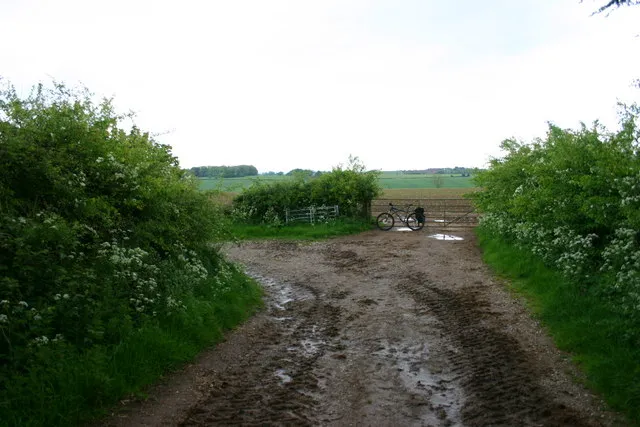
Photo: Alexander P Kapp, CC BY-SA 2.0, via Wikimedia Commons
You've probably had this experience before. You pull up to a rental, drag your bags inside, and within twenty minutes something just... shifts. Your shoulders drop. Your jaw unclenches. You stop mentally composing emails. It feels like the place itself is doing the work for you.
Most people chalk that up to "being on vacation." But there's actually something more specific going on — and if you've ever stayed in a well-positioned cottage that catches a cross-breeze or sits at the edge of a treeline where the wind moves through in steady, soft pulses, you've already experienced what researchers are starting to call microclimate therapy, even if no one told you that's what it was.
What a Microclimate Actually Is (And Why Your Cottage Has One)
A microclimate is just the localized climate of a small, specific area — different from the broader regional weather around it. A south-facing hillside is warmer than the valley below it. A cottage tucked near a pond catches cooler air in the evening. A building positioned between two tree lines creates a natural wind channel that pulls air through in a way a sealed apartment building never could.
Cottages, particularly older or traditionally designed ones, tend to sit within microclimates almost by design. Before central air conditioning, builders paid close attention to prevailing wind directions, sun angles, and natural land features. They had to. The result is that a well-sited cottage often breathes in a way that modern construction simply doesn't bother with.
At Four Winds Holiday Cottage, that relationship between structure and environment isn't accidental. The name itself reflects something real — the idea that wind comes from all directions, and that where you position yourself in relation to those directions changes how you feel.
The Nervous System Connection
Here's where it gets genuinely interesting. Your autonomic nervous system — the part that handles stress responses, heart rate, and the constant low-level threat assessment your brain runs in the background — is surprisingly sensitive to air movement.
Research in environmental psychology has shown that natural ventilation (meaning actual moving air from outside, not recycled HVAC air) tends to push people toward parasympathetic nervous system states. That's the "rest and digest" mode, the opposite of fight-or-flight. The mechanisms aren't fully understood, but a few things seem to be at play:
Negative ions. Moving air, especially near water or through dense vegetation, carries higher concentrations of negative ions. These are associated with elevated serotonin metabolism and reduced cortisol. Studies have found that people exposed to negative ion-rich environments report lower anxiety and better mood — effects that show up even when participants don't know what they're being exposed to.
Thermal variability. A cottage that catches a breeze creates small, natural fluctuations in temperature — a cooler draft from the north window, a warmer patch of afternoon sun near the south-facing wall. Your body is actually designed to handle this kind of gentle variation, and some sleep researchers believe that mild thermal cycling (cooling as you drift off, slight warmth in the morning) supports deeper, more restorative sleep cycles.
Olfactory cues. Wind carries scent, and scent bypasses the rational brain almost entirely, going straight to the limbic system — the area associated with memory and emotion. The smell of pine resin, cut grass, rain on dry soil, or salt air doesn't just smell nice. It triggers neurological responses linked to safety and familiarity in ways that synthetic environments simply can't replicate.
The Four Winds and What Each Direction Does
Different wind directions bring different qualities of air, and cottage guests — consciously or not — respond to these shifts throughout the day.
North winds tend to bring cooler, drier air. In the summer, a north-facing window open at night is often what makes the difference between a restless night and a genuinely deep sleep. Cooler air reduces core body temperature, which is one of the key physiological triggers for sleep onset.
South winds carry warmth and, in many parts of the US, moisture. A south breeze in spring can carry that soft, almost heavy quality of air that feels like permission to slow down. There's a reason porches traditionally face south — it's where the gentlest, most lingering air tends to come from.
East winds bring morning freshness. The coolness of early air moving in from the east, before the day heats up, has a specific alerting quality that's very different from the jolt of an alarm clock. It's a gentler version of waking up — your body registers the shift in air quality before your conscious mind catches on.
West winds, particularly in the afternoon and evening, often carry the day's warmth and whatever the land has been releasing — dried grass, sun-warmed wood, the particular dusty sweetness of late afternoon. These are the winds that make front porch sitting feel like a complete activity in itself.
Why This Matters More Than You Think
Most Americans spend upward of 90% of their time indoors. Filtered, conditioned, recirculated air. Constant temperature. No variation, no breeze, no connection to what's actually happening outside. The body adapts, but adaptation isn't the same as thriving.
When you spend even a few days in a cottage environment where the windows actually open, where you feel the air change between morning and evening, where you wake up because the temperature shifted rather than because your phone screamed at you — something recalibrates. Guests often describe it as "finally feeling rested" or "I didn't realize how tense I was until I stopped being tense."
That's not poetry. That's your parasympathetic nervous system getting a chance to run the show for a while.
How to Make the Most of It
If you're planning a cottage stay and you want to lean into these effects intentionally, a few things help:
- Sleep with a window cracked. Even a small opening changes the air quality in the room overnight. You'll likely notice the difference in how you feel in the morning.
- Spend time outside at transition moments. Dawn and dusk are when wind patterns shift most noticeably. These are also the times when negative ion concentrations tend to peak.
- Put your phone down and just sit in moving air. It sounds almost embarrassingly simple, but twenty minutes on a porch or in a garden with a breeze going is doing measurable things to your cortisol levels.
- Notice what direction the wind is coming from. Not because you need to know, but because paying attention to something outside yourself is one of the fastest ways to interrupt anxious thought loops.
The cottage environment does a lot of the heavy lifting. Your only job is to stop blocking it.
The Takeaway
There's a reason the best cottage stays feel different from other kinds of vacations. It's not just the slower pace or the prettier views, though those help. It's the air itself — how it moves, what it carries, and how your nervous system responds to finally being inside a space that breathes.
The four winds aren't just a romantic metaphor. They're a delivery system for some of the most underrated wellness inputs your body can receive. And at Four Winds Holiday Cottage, that's not a coincidence. It's the whole point.