One Cottage, Four Moods: Why Multiple Outdoor Spaces Are the Secret to a Real Reset
Most people pick a vacation rental based on the kitchen, the bed count, and whether the Wi-Fi password is easy to remember. Totally understandable. But if genuine rest is the goal — the kind where you actually come home feeling like a different person — there's one feature that matters more than almost anything else: how many distinct outdoor spaces the place has.
Not just a deck. Not just a yard. Multiple different outdoor environments, each one positioned to catch a different slice of the day.
This is the whole idea behind the Four Winds philosophy we think about a lot here at Four Winds Holiday Cottage. Wind doesn't blow from one direction all day. Light doesn't stay in one corner of the property. And your nervous system, as it turns out, doesn't want to recover in one static spot either.
Why Your Brain Needs More Than One Outdoor View
There's a well-documented concept in environmental psychology called restorative experience theory. The short version: natural environments help your brain shift out of directed attention — the focused, effortful thinking you do at work — and into a softer, more replenishing mode. But here's the part most people miss. That restoration isn't unlimited from a single source.
After enough time in one spot, even a beautiful one, your brain starts to habituate. The view becomes wallpaper. The breeze stops registering. You're still outside, but you've mentally checked back in to your to-do list.
Moving to a different outdoor space — one with different sightlines, different wind exposure, different ambient sound — essentially resets that restorative clock. You're giving your brain a fresh input stream without demanding anything from it. That's the sweet spot for recovery.
The Sheltered Porch: Your Morning Anchor
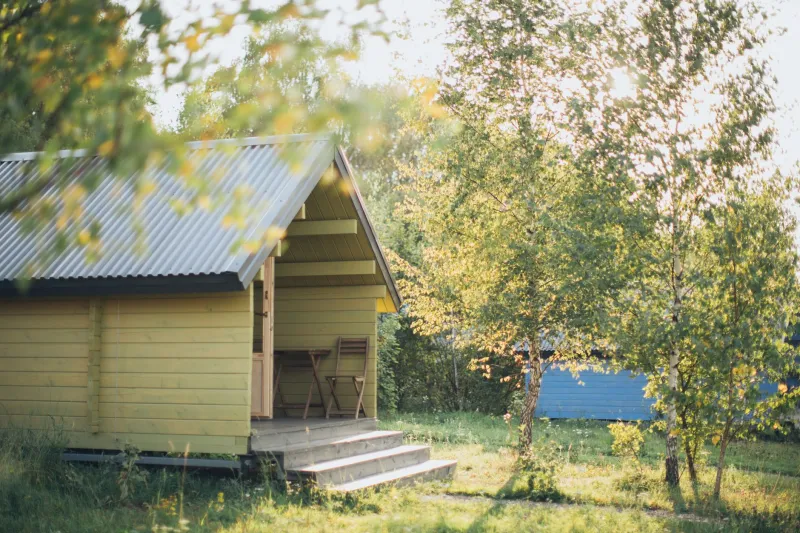
Every good cottage needs at least one protected outdoor space. A covered porch, a recessed sitting area, somewhere the wind is softened and the sun doesn't come at you full-force first thing in the morning.
This is your gentle re-entry point into the day. It's where you hold a coffee mug with both hands and let the world come to you slowly. The shelter here isn't about avoiding nature — it's about easing into it. Studies on cortisol patterns show that how you spend the first hour of your morning has an outsized effect on stress levels for the rest of the day. A sheltered porch gives you a low-stimulation outdoor option that doesn't require sunglasses, a hat, or any particular alertness.
Think of it as the cottage equivalent of a long, unhurried exhale.
The Open Deck: Where You Actually Feel Alive
On the opposite end of the spectrum, you need a space that's fully exposed — somewhere the wind actually reaches you, where you can feel the temperature shift when a cloud passes overhead, where you're genuinely in the weather rather than just adjacent to it.
This is your afternoon space. Your post-hike debrief spot. The place where you drag a chair to face the view and let the breeze do whatever it wants with your hair.
There's good research behind this too. Mild wind exposure and temperature variation activate the body's thermoregulatory system in ways that are associated with improved mood and alertness. It's the same reason a walk on a breezy day feels more refreshing than a walk in still, heavy air. The open deck gives you that experience without requiring you to go anywhere.
The Garden Nook: Recovery's Best-Kept Secret
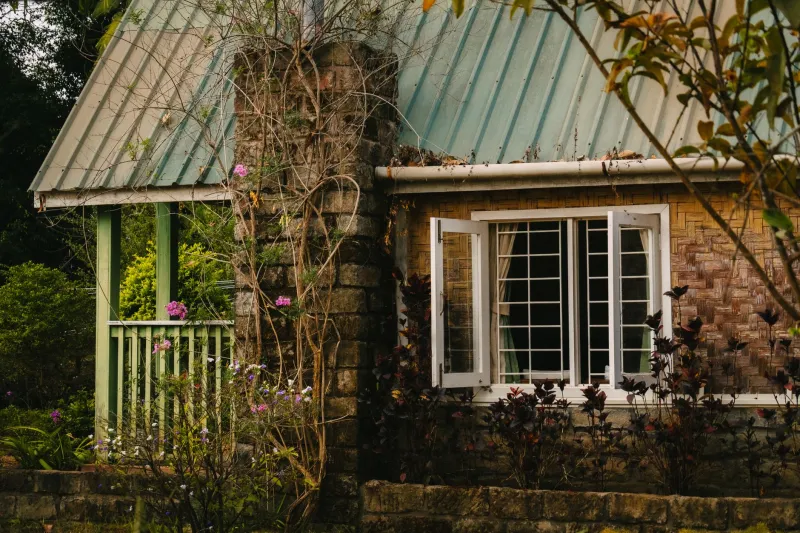
If you've ever sat in a small, tucked-away garden corner — surrounded by plants, maybe a little overgrown, away from the main sight lines of the property — you know there's something almost unreasonably calming about it.
This kind of enclosed green space offers what researchers call prospect and refuge — you can see out, but you feel protected. It's the same instinct that makes humans prefer to sit with their backs to walls in restaurants. In a garden nook, your nervous system reads the environment as safe, which is exactly the condition under which deep rest actually happens.
For people who find big open views slightly overstimulating (more common than you'd think), the garden nook might be the most used space on the entire property. It's also where afternoon reading tends to happen, where journals get filled, where the best naps occur.
The Wind-Exposed Sitting Area: For When You Need to Feel Something
Then there's the fourth kind of outdoor space — the one that doesn't try to protect you from anything. Positioned where the prevailing wind hits directly, maybe elevated, maybe at a corner of the property where breezes converge. This is the space that wakes you up in a completely different way than caffeine does.
There's a reason so many meditation traditions and breathwork practices involve facing into the wind. The physical sensation of air moving against your skin triggers a mild activation of the nervous system that, paradoxically, leads to mental clarity rather than agitation. You feel present. Grounded. Here.
This space tends to be underused by people who don't know it's there, and obsessively returned to by people who discover it on day two.
Why Single-View Rentals Leave You Flat
Here's the honest truth about a lot of vacation rentals: they have one outdoor space, optimized for one thing — usually the most photogenic angle of the property. That's great for the listing photos. It's less great for a week-long stay.
When your only outdoor option is a single deck facing a single direction, you're essentially asking one environment to carry all your recovery needs from sunrise to sunset, across a full range of moods and energy levels. It can't do that. No space can.
The result is that people end up spending more time inside than they planned to, defaulting to screens, and returning home feeling like the vacation was fine but somehow not quite enough.
What to Actually Look For When You Book
Next time you're browsing rentals, look past the hero shot. Scroll through all the outdoor photos and ask yourself: does this place have variety? Is there somewhere protected and somewhere exposed? Is there a green, enclosed corner and an open, breezy one?
Look at the property layout from above if you can find it. Check which direction the main outdoor spaces face. A cottage with a southeast-facing porch and a northwest-facing garden is going to give you dramatically different outdoor experiences at different times of day — and that variety is exactly what makes a stay genuinely restorative rather than just pleasant.
The best cottage stays feel almost like they've been designed around your nervous system. That's not an accident. It's architecture meeting wellness in the most practical way possible — and it starts with stepping outside into a space that's ready for exactly the mood you're in right now.